About Craft Tallow
Five balms from a kitchen counter in the Wasatch. Our family tests every recipe first.
Shop the five balms Take the quiz
How this started
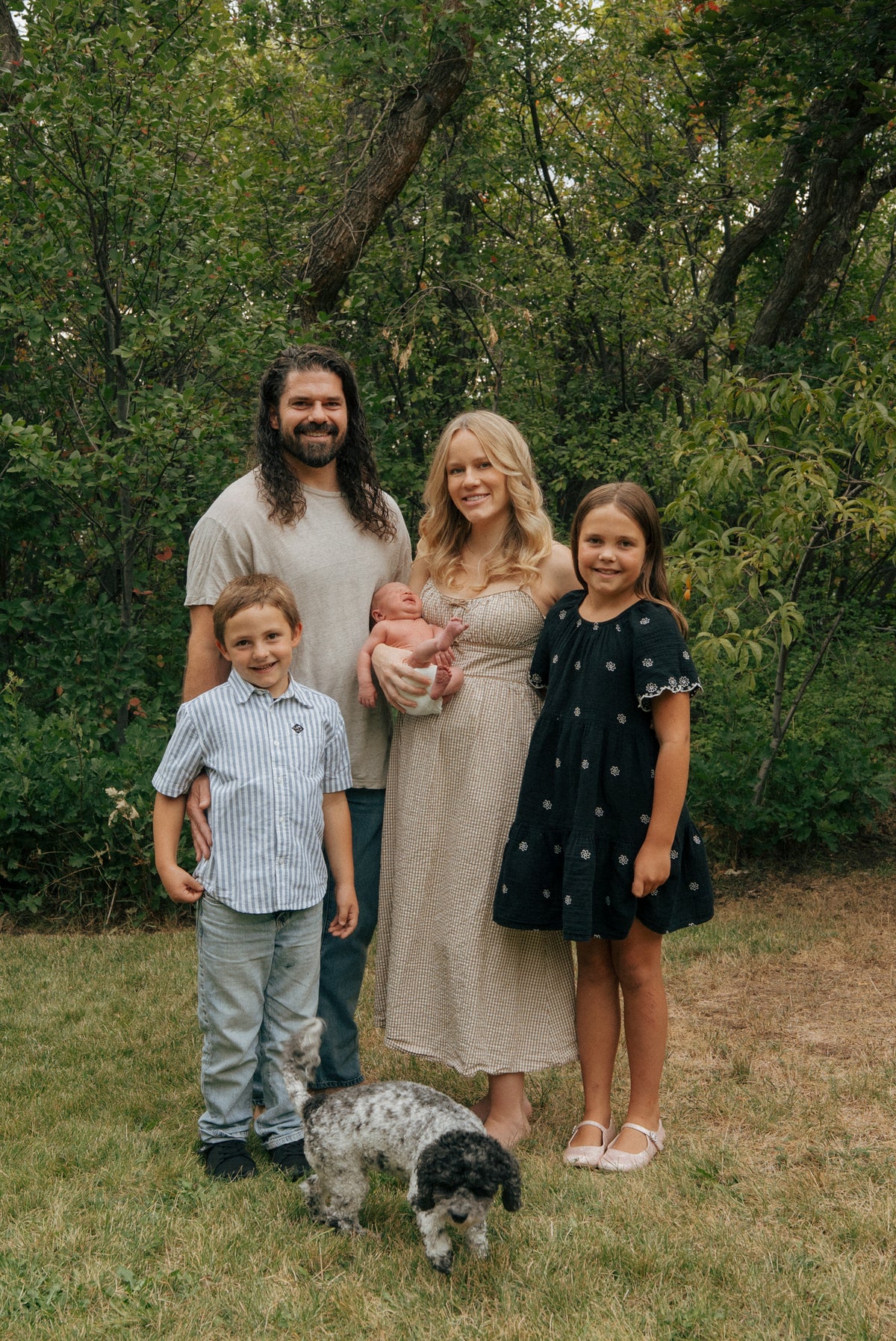
Craft Tallow started at our kitchen counter with a jar of rendered suet and a scale. Skin in this house argued with everything from the drugstore, so we blended our own. The first jars went on our family. Friends asked for one, then strangers asked where to buy one. It still runs from the same counter. The kids test new recipes and pack boxes; if your box arrives with especially careful tape work, small hands helped.
One question comes before any other: does it smell like beef? The suet itself is nearly scentless. Bare Silk Unscented smells like nothing, and the scented jars smell like the botanical on the label, then fade as the balm settles in.

Brian, founder
I source the suet, set the rendering standard and make the final call on every recipe. I have chased one idea for years: the answers for skin and health should be chemical-free, whole ingredients with a short label. A thirty-ingredient cosmetic bottle is mostly water, preservatives and chemicals I did not want on my kids.
Before the first jar shipped, I spent six months on the research. I read every recipe and every ingredient in it, down to the dose at which the published studies saw an effect. I also read how those ingredients behave together in one jar instead of one at a time. I cross-checked every finding across four separate research sources, so no single source carries a claim. A recipe had to answer one skin problem before it earned a name.
I write the science and ingredient posts in the Journal. Each jar passes through my hands in Cottonwood Heights, Utah before it ships, and every email you send lands with me. When a post says "I tried this on my own hands for two weeks," that is not a figure of speech.
Meet Craft Tallow: who we are and how we work
Aspen, co-founder
I run the wear tests. Every recipe goes on my skin, on Brian's and on the kids' for weeks before it gets a label. I judge what a lab cannot: how a balm sits at 7 a.m. and at bedtime, how fast it settles in, what it does for the look of dry hands and flushed cheeks, and how it smells an hour later.
My bar is plain. Dry hands should look and feel like hands again by morning, and redness should look calmer rather than covered. After a month a stretch mark should look softer at the edges, and fine lines should look softer in the mirror without disappearing. A recipe that cannot clear that bar on our own skin does not ship. One that leaves a film goes back to the bench, whatever the study said.
I write the Journal posts about living with the jars: how to use one, bedtime, the baby, the pregnancy months. Those posts say what a month on a recipe does for the look of a family's skin.
Twenty years at the formulator's bench
The recipes are ours, every one built beside the formulator we have worked with since the beginning, twenty years of making balms and salves by hand. She taught us the difference between a recipe that reads well on paper and one that holds its texture through a hot July delivery. She blends our components in small batches in the Mountain West, from the suet Brian sources and the botanicals we choose together. Nothing gets a name until the three of us agree it is finished. Craft Tallow is a family operation with one seasoned friend at the bench, and that is how we want it.
Sourced without shortcuts
We start with 100% suet, the dense fat from around the kidneys, from grass-fed and grass-finished cattle on Montana family ranches, bought direct. We are not a ranch. We set the standard and check it on every delivery. Whole botanicals arrive by cold press or CO2 at studied doses. The full sourcing story lives on Our Ingredients, and the case for the fat itself on Why Tallow.
What is not in the jar
Craft Tallow recipes contain no parabens, no phthalates, no synthetic fragrance, and no dyes. Water is absent too, which is why no jar needs a preservative system. Most conventional creams carry all five because they are mostly water and would spoil without them, and some of those ingredient classes are under active study as endocrine disruptors. We skipped the debate by skipping the water. The complete list, and what is always in the jar instead, lives on the Never List.
Researched, then formulated
Every recipe starts with a job, not an ingredient. We name the outcome first, read the published research on what has moved it, then blend candidates at the bench and wear them for weeks before anything ships. Bakuchiol sits at a true 1%, twice the 0.5% tested head to head against retinol in published research. Blue tansy stays inside published safety limits. Vitamin C is the oil-soluble form, so it stays potent in a jar with no water in it, and the manuka honey is oil-soluble for the same reason. What survives the reading and the wearing becomes a recipe, at the dose the study used. The old remedies gave us the base fat. The research set the doses.
- Start with grass-fed suet tallow. The ancestral base fat, no water.
- Add only what earns a place after it goes on our own skin.
- Small batches in the Mountain West. Short labels. Sixty days to disagree.
The promise
Every balm here goes on our own family first, including the newest member of it. The 60-Day Skin Test follows from that: sixty days with any jar, and if your skin disagrees, we refund it.

Start here
Shop the five balms Take the quiz
Questions, ideas, or want to talk tallow? Contact us and one of us will get back to you directly.